
Website Builder for Churches & Ministries: Sermons, Giving & Community
Website Builder for Churches & Ministries: Sermons, Giving & Community
On any given Sunday, someone in your town is looking for a church. They may be new to the area, returning to faith after years away, or simply searching for a community where their family belongs. Before they ever step through your doors, they will almost certainly visit your website first. That first visit decides whether they come on Sunday morning or keep scrolling. A good website builder for churches makes sure that first impression feels warm, welcoming, and unmistakably yours.
Church websites carry a different kind of responsibility than most business sites. They are not just marketing tools; they are ministry tools. Your website welcomes visitors, shares the week’s message, keeps the congregation informed, and makes it simple for people to give, volunteer, and stay connected through the week. With an AI-powered builder, a volunteer can launch a beautiful church website in a weekend — and keep it updated without learning to code.
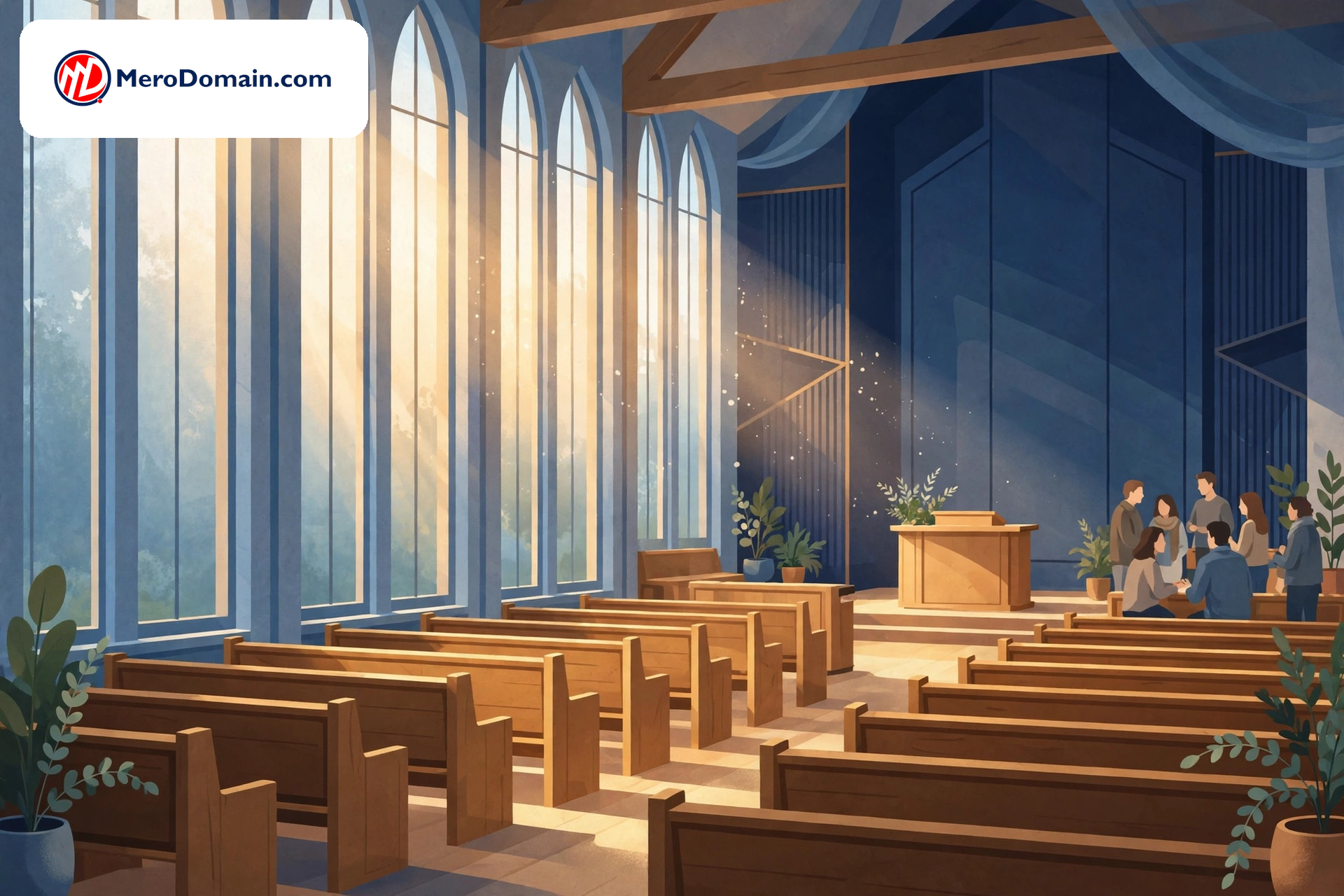
Why a Website Builder for Churches Fits Ministry Life
Most churches run on volunteers. The person updating the website might be the pastor, a deacon, or a faithful member who also teaches Sunday school and runs the food pantry. A website builder for churches respects that reality: it gives you a complete starting point and simple editing tools, so keeping the site current is a ten-minute job, not a project that stalls for months.
Built for volunteers, not web developers
The best church website is the one that actually gets updated. When the bulletin changes, the sermon series changes, or a special event is announced, your site should change with it — the same week, not the next quarter. A builder with simple drag-and-drop editing means the volunteer who handles the newsletter can also update the homepage, post the new sermon, and add the Christmas concert to the calendar. That keeps your site honest: visitors always see current service times, current events, and a congregation that is clearly alive and active.
Start With a Design That Feels Like Your Church
Every congregation has its own character. A historic downtown church, a contemporary church plant meeting in a school, and a rural chapel all feel different — and their websites should too. Website themes give you a professional starting design that you can shape with your colors, your photos, and your wording, so the site feels like an extension of your sanctuary rather than a generic template.
Choose a theme with strong, warm photography of real people and real worship, because visitors decide in seconds whether your church feels like a place they could belong. Feature your congregation, not stock imagery: a photo of your worship team, your children’s ministry, or your community meal tells a truer story than any polished graphic.
Sermon Archives That Keep the Message Working All Week
Sunday’s sermon reaches the people in the room. An online sermon archive reaches everyone else: the member who was traveling, the shift worker who could not attend, the seeker who wants to hear what your church actually teaches before visiting. Posting sermons online is one of the highest-value things a church website can do, and it is also one of the simplest.
Organize sermons by series and by date, with a short description of each message and the Scripture passage it covers. Audio is enough to start; video is even better, since visitors can see the warmth of your worship. Over time, the archive becomes a library of your church’s teaching — a resource members return to and a gentle on-ramp for people exploring faith.
Make sermons easy to find and share
Give each sermon its own page with a clear title, so members can share a single message link with a friend instead of sending them to a confusing folder. Add a simple search or series filter, and feature the most recent sermon on the homepage so returning visitors always find something new. Small touches like these turn a static archive into a living ministry.
Online Giving That Honors Generosity
Giving has changed. Fewer people carry cash or checkbooks, and many members now give from their phones during the week rather than in the offering plate on Sunday. A church website without a simple, trustworthy giving page is quietly leaving generosity on the table — and making it harder for faithful givers to do what they already want to do.
Your giving page should be easy to find from every page of the site, clearly explain where gifts go, and offer both one-time and recurring options. Recurring giving steadies the church’s budget through travel and holiday seasons. Keep the language about ministry, not transactions — people give to vision, not payment forms.
Event Calendars and Ministries That Invite Participation
A church is a community, and a community runs on events: Bible studies, youth nights, volunteer days, potlucks, mission trips, and holiday services. Your website’s calendar is often the first place a newcomer looks to answer the question, “What actually happens here during the week?”
Keep the calendar current and specific. Each event should show the date, time, location, who it is for, and how to get involved — plus a contact person for questions. Create a dedicated page for each ministry (children, youth, missions, music, outreach) with photos and a plain-language description of what it does and who can join. When a visitor can picture themselves in your Wednesday night small group or your Saturday food pantry, they are far more likely to show up than when they only see a list of meeting times.
Reach New Visitors With Local Search
When someone searches “church near me” or “churches in [your town],” your website is competing with every other congregation in the area — and with directory listings that may show outdated information. Local search visibility is how new families find you, and it starts with the basics done well: your church’s full name, address, service times, and denomination or tradition, written clearly on your homepage and contact page.
Add a page for each question visitors actually ask: What time are services? What should I wear? Is there children’s programming? Where do I park? Answering these plainly, in friendly language, does double duty — it reassures nervous first-time visitors, and it helps search engines match your site to the searches people really type. A custom domain name that matches your church’s name (for example, yourchurchname.org) also makes your site easier to remember, easier to share on a bulletin, and more credible in search results than a long subdomain on someone else’s platform.
Practical Tips for Launching Your Church Website
You do not need to launch everything at once. Start with the pages that matter most, and grow from there:
- Homepage: service times, location, a warm welcome, and one photo of your congregation.
- About and beliefs: who you are, what you believe, and who leads the church.
- Plan your visit: parking, children’s check-in, what to expect, and a contact form.
- Sermons: your most recent messages, organized by series.
- Events and ministries: a current calendar and a page per ministry.
- Give: a simple, secure giving page linked from every page.
Assign one person to own updates, and one backup for when they are away. Review the site once a month: are service times still right, is the calendar current, is the latest sermon posted? Choose a builder with industry templates for churches, so you start from congregation-ready pages.
A Website That Serves the Church, Not the Other Way Around
Technology should serve ministry, never distract from it. The right website builder for churches quietly handles the technical work — design, hosting, mobile display, search basics — so your people can focus on preaching, teaching, serving, and welcoming. Your website will never replace a handshake at the door or a conversation over coffee, but it can make sure more people walk through that door in the first place, and that they feel known before they arrive.
Whether your congregation numbers fifty or five thousand, your online front door deserves the same care as your physical one. Start simple, keep it current, and let your website do what it does best: welcome people home. You can begin today with an AI website builder free trial and have a draft site ready before the week is out.
Try Now — Free AI Website Builder
Related Resources
- AI Website Builder (Free Trial) — Start building your church website free with AI-generated pages tailored to your ministry.
- Website Themes — Browse professional themes to give your church site a warm, polished design.
- Industry Templates — Explore templates built for churches, ministries, and other organizations.
- Domain Registration — Register a memorable domain name that matches your church’s name.